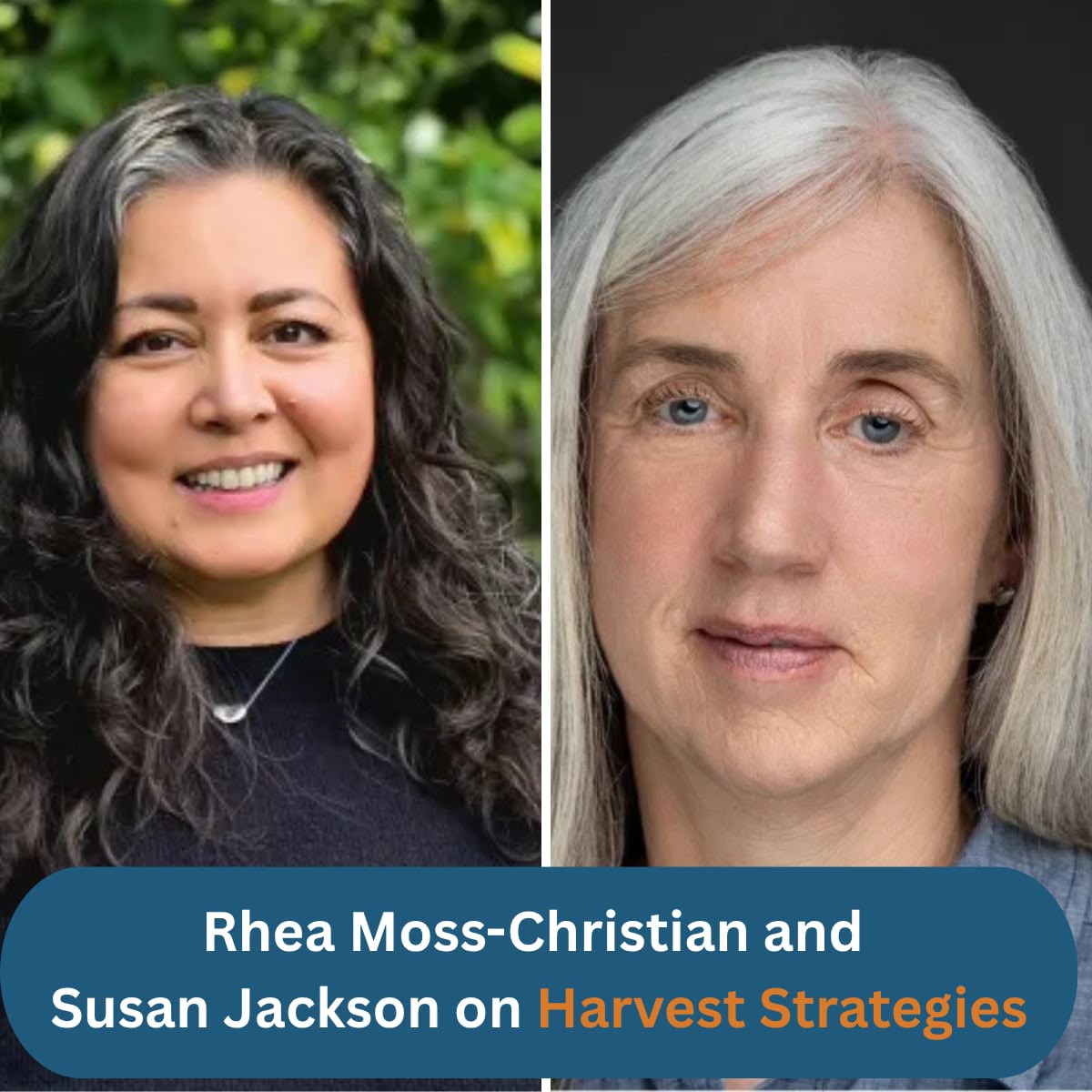
Rhea Moss-Christian | WCPFC Executive Director
Susan Jackson | ISSF President
Over two decades, the Western and Central Pacific Commission has built something concrete: a science-based management system that works. A harvest strategy is more than policy: it's the infrastructure that keeps fisheries resilient, predictable, and sustainable.
JOINT Q&A on HARVEST STRATEGIES
Question 1 (Rhea)
What is a harvest strategy, and why does it represent a different approach to fisheries management?
When you look at global tuna production, the numbers are staggering. Over 5.5 million tonnes caught every year. The Western and Central Pacific supplies 56% of that, worth roughly 5.6 billion dollars. Yet for decades, we've managed these fisheries in the most reactive way imaginable. Year after year in a negotiating room, where politics and economics override science.
Instead of negotiating the numbers every year, we negotiate the rules upfront. We agree in advance on a clear framework: upper and lower bounds for the fishery, triggered actions if the stock hits those bounds, and science-based reference points that guide those decisions. Once this framework is in place, the rule does the work. That is harvest strategy.
What makes this different is predictability, where management actions are agreed in advance based on when the fish stock reaches a certain level. Fishers know what to expect year to year. Governments can plan with certainty. Politics steps out of the decision at the moment it matters most. That is how we keep global tuna fisheries strong and resilient for generations to come.
Question 2 (Susan)
From ISSF's perspective as an independent scientific and industry body, what has changed since WCPFC adopted this approach?
To me, one of the biggest shifts has been seeing harvest strategies move from concept to implementation. WCPFC has taken important steps in that direction, and it’s encouraging to see more tuna RFMOs advancing these approached as part of long-term fisheries management.
We’ve also seen that tuna stocks can recover when strong management measures are put in place and necessary conservation actions are taken. Both Atlantic and Pacific bluefin are good examples of that. Harvest strategies build on those successes by helping managers respond earlier and more predictable as conditions change, rather than waiting until difficult management decisions become unavoidable. They provide a transparent, agreed framework for making decisions over time, helping support healthy tuna stocks and more stable, effective fisheries management.
Question 3 (Rhea)
Skipjack, South Pacific albacore, North Pacific albacore: WCPFC now has harvest strategies or management procedures across three of its key tuna stocks. What does that track record tell us about what is possible when governance is built on pre-agreed rules?
What this track record shows me is that harvest strategies work. They are not theoretical. They are tested and operational across three of our major stocks.
The skipjack fishery in the Western and Central Pacific is the largest in the world. Robust management here is critical for the livelihoods of many small island developing states, fishers, and consumers around the world. Reaching agreement on upper and lower bounds to maintain the fishery at a level that supports socio-economic outcomes without compromising biological sustainability is a significant achievement.
Likewise, the harvest strategies for South Pacific albacore and North Pacific albacore represent strong cooperation by all stakeholders. These stocks are managed jointly across regions, demonstrating what broad cooperation can achieve when all players share a common objective. This is the track record that matters.
Question 4 (Susan & Rhea)
What does the international ocean governance community need to understand about this experience as it builds new institutions?
Susan: One lesson we've learned is that effective international fisheries management depends on more than adopting management measures. It requires strong scientific advice, experienced scientists, high-quality data, and organizations with the expertise to translate that science into practical management decisions. Just as importantly, it requires mechanisms to evaluate whether those decisions are being implemented and whether they're achieving the intended outcomes.
Tuna RFMOs have spent decades developing the scientific expertise, management procedures, and compliance systems needed to manage highly migratory species across international waters. Those systems continue to evolve as new information becomes available, and they offer valuable lessons for the broader ocean governance community. As new international frameworks develop, there's real value in building on that expertise---sharing practical experience and strengthening cooperation across organizations to advance sustainable, science-informed fisheries governance.
Rhea: The Western and Central Pacific Commission has spent decades building exactly this infrastructure. We have the scientific systems, the management procedures, the compliance architecture, and the regional cooperation frameworks already in place. As new international ocean governance institutions emerge, there's real value in building on what's proven to work. That's not procedural handoff---that's access to twenty years of practical learning about what functions on the high seas.
But here's what it actually takes. Shared commitment from member states. Transparent consultation with everyone who depends on these fisheries---fishing communities, island governments, conservation partners. That consistency, that genuine engagement, is what creates lasting impact. Robust resource management doesn't happen in isolation. It happens through strong regional cooperation toward shared objectives. That's what twenty years of proven experience looks like. That's what's ready now.
Question 5 (Susan)
Harvest strategies remain at very different stages of advancement across RFMOs. What do you think would accelerate this movement globally?
The good news is that we already know what works. We have strong science, tested management procedures, and practical experience from multiple tuna RFMOs. The challenge now is turning that experience into broader implementation.
One of the best ways to accelerate progress is for RFMOs to continue learning from one another. Every organization has taken a slightly different path and has valuable experience to share, whether it's developing management procedures, engaging stakeholders, or implementing them in practice. Collaborative initiatives, like the FAO-led Common Oceans Tuna Project, help create opportunities to exchange knowledge and practical experience across tuna RFMOs. ISSF has long supported that exchange of knowledge because it helps everyone move forward more efficiently.
Ultimately, harvest strategies are not an end in themselves. They're a tool for helping ensure fisheries remain productive, resilient and able to support future generations. The more we can build on the progress already being made, the faster we'll get there.